

Humanities
Civilization Lab
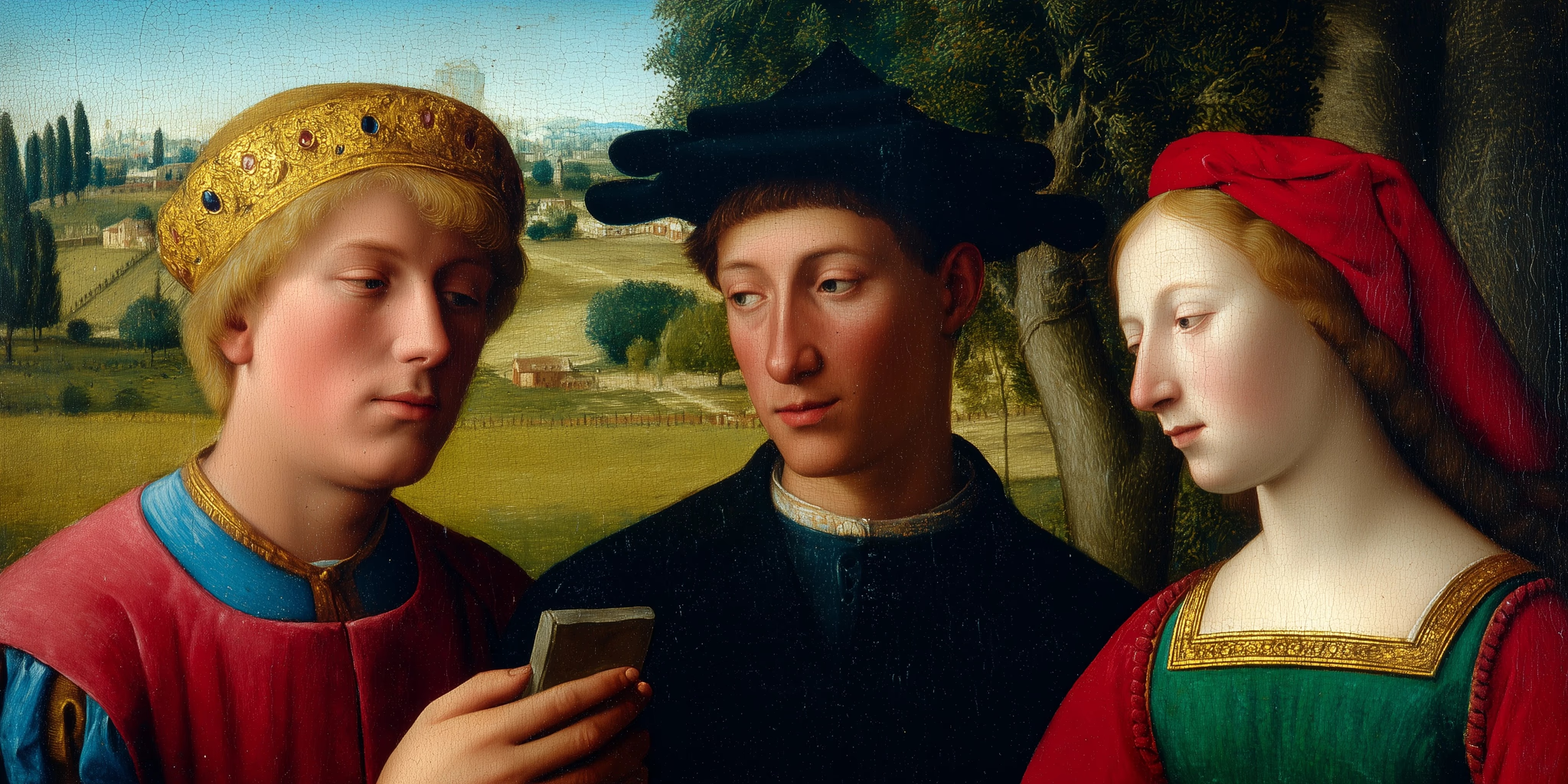
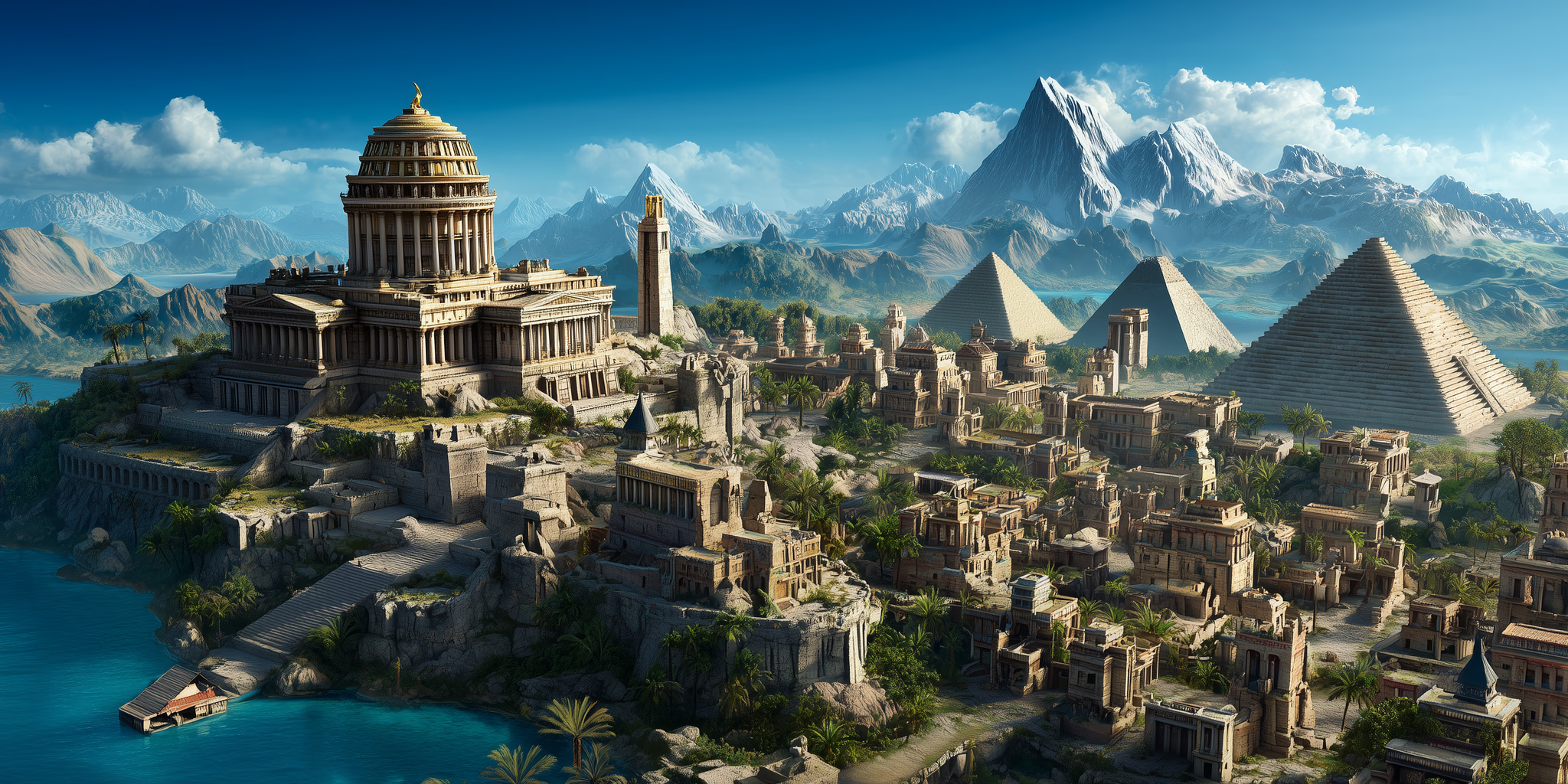
Ever dreamed of creating your own empire, designing towering cities, or shaping the laws of an entire society? In this course, you’ll become the architect of a brand-new civilization, drawing inspiration from some of history's most influential societies—like the Inca Empire, Ancient Rome, Medieval Japan, and modern America. Each week, you’ll uncover the secrets of past civilizations, take part in interactive challenges, and apply your knowledge to bring your own world to life.
Will your civilization be a peaceful utopia, a military superpower, or something the world has never seen before? You’ll express your vision through a Minecraft build, a D&D campaign, a board game, a novel, or even a 3D model—whatever medium best brings your ideas to life. Along the way, you’ll sharpen your skills in research, writing, project planning, and collaboration.
In the end, you’ll present your civilization and see if it has what it takes to stand the test of time.
Questbound
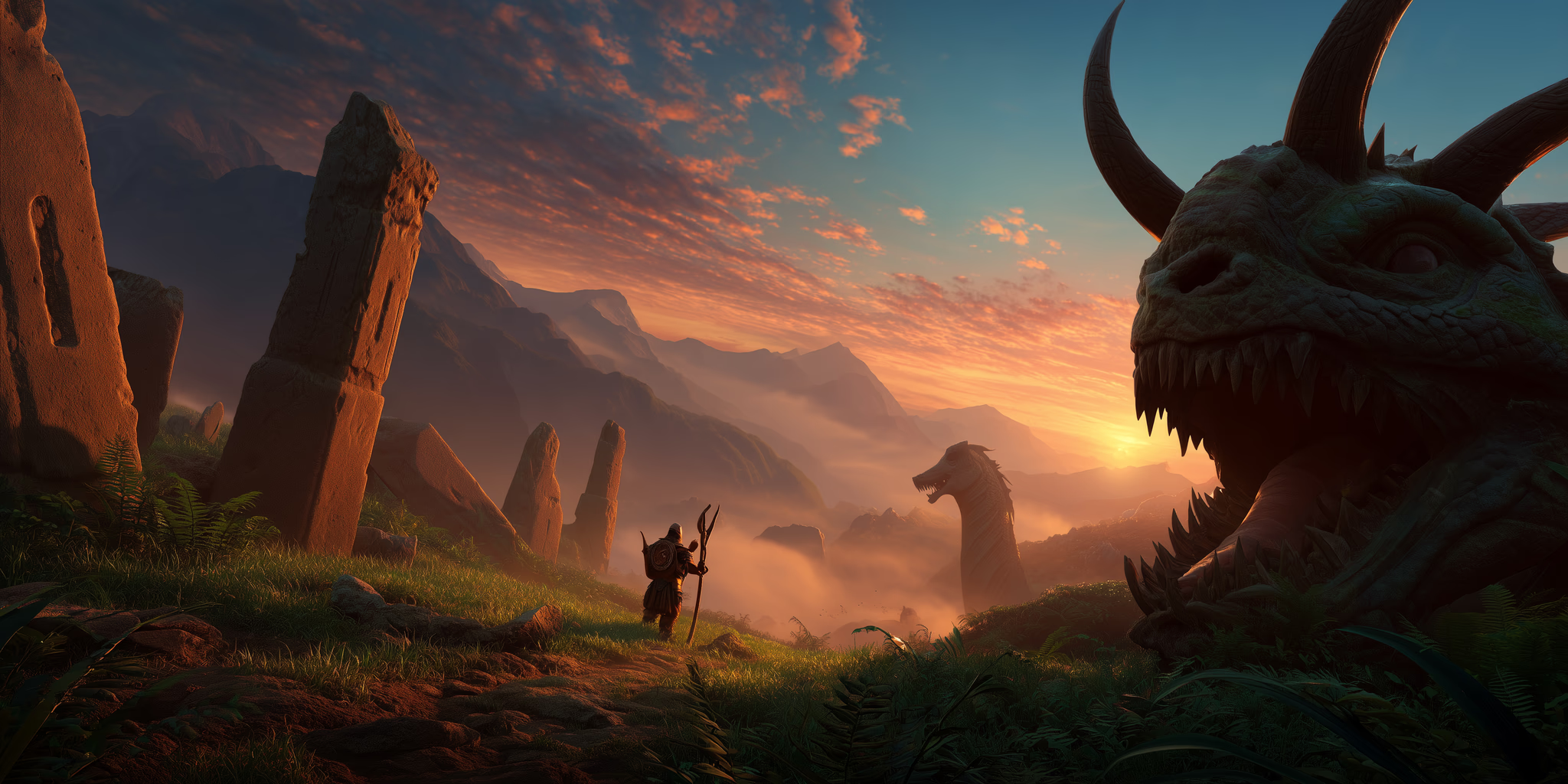
Explore the Hero’s Journey—a timeless storytelling framework—through the lens of ancient civilizations and world literature. From the trials of Greek demigods to the wisdom of Egyptian deities and the courage of African folk heroes, you’ll uncover how cultures across time have shaped the classic hero’s tale.
Through interactive readings, discussions, and creative projects, you'll compare heroic stories from diverse traditions, examining their themes, challenges, and transformations. The course culminates in an exciting storytelling project where you’ll craft your own original tale, inspired by the myths and journeys you've explored.
Camp Half Blood
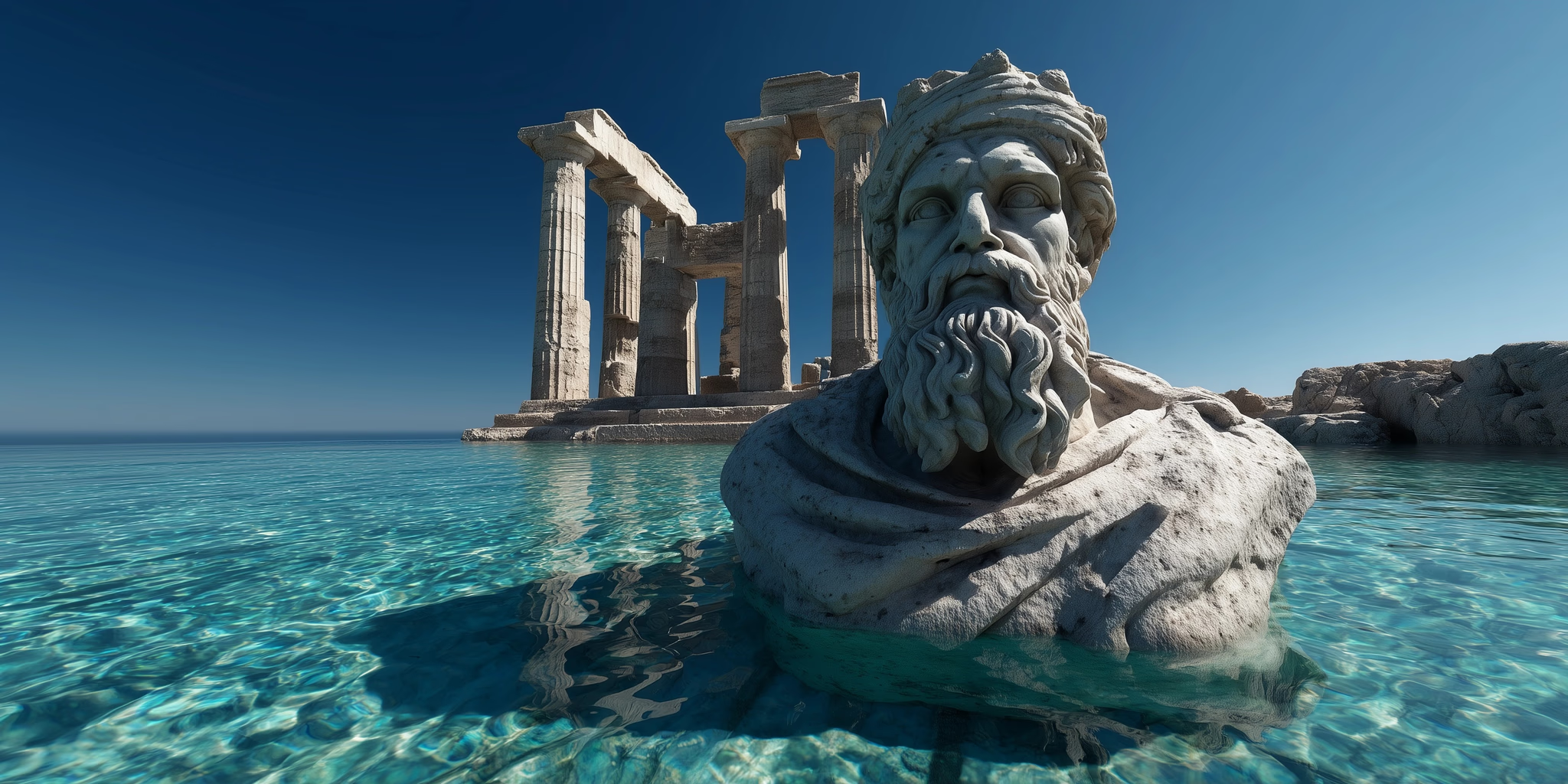
Greek mythology and Percy Jackson fans—your time has come to embark on an expedition to Camp Half-Blood! In this course, we’ll dive into Percy Jackson and the Lightning Thief by Rick Riordan, a thrilling fantasy novel about a modern teen who discovers his father is none other than the Greek god Poseidon.
Alongside our novel study, we’ll explore the world of Greek mythology, from the iconic gods and goddesses to epic myths and legendary monsters. You’ll tackle big questions like: What makes a hero? Why do cultures create myths? And what can these stories teach us about being human?
We’ll also analyze modern retellings in film, TV, and comic books that breathe new life into these ancient tales. By the end of the cycle, you’ll craft your very own original myth or creation story—your own contribution to the world of legend.

Sacred Journeys: Exploring Global Faiths and Cultures
Get ready for an exciting adventure around the world—no passport required! Sacred Journeys invites you to uncover the fascinating traditions, sacred spaces, and powerful beliefs that shape cultures across the globe. From ancient temples to modern-day rituals, you’ll explore how people express their faith through art, music, festivals, and everyday life.
Step into the shoes of a pilgrim visiting holy sites, decode symbolic meanings, and create your own artwork inspired by religious traditions. Along the way, you’ll dive into big questions: How does faith influence history and society? What do different religions have in common? How do sacred practices shape the way people live?
Through hands-on projects, virtual explorations, and real-world connections, you’ll develop a deeper understanding of global religions—and the shared values that unite us all.
From Empires to Emojis
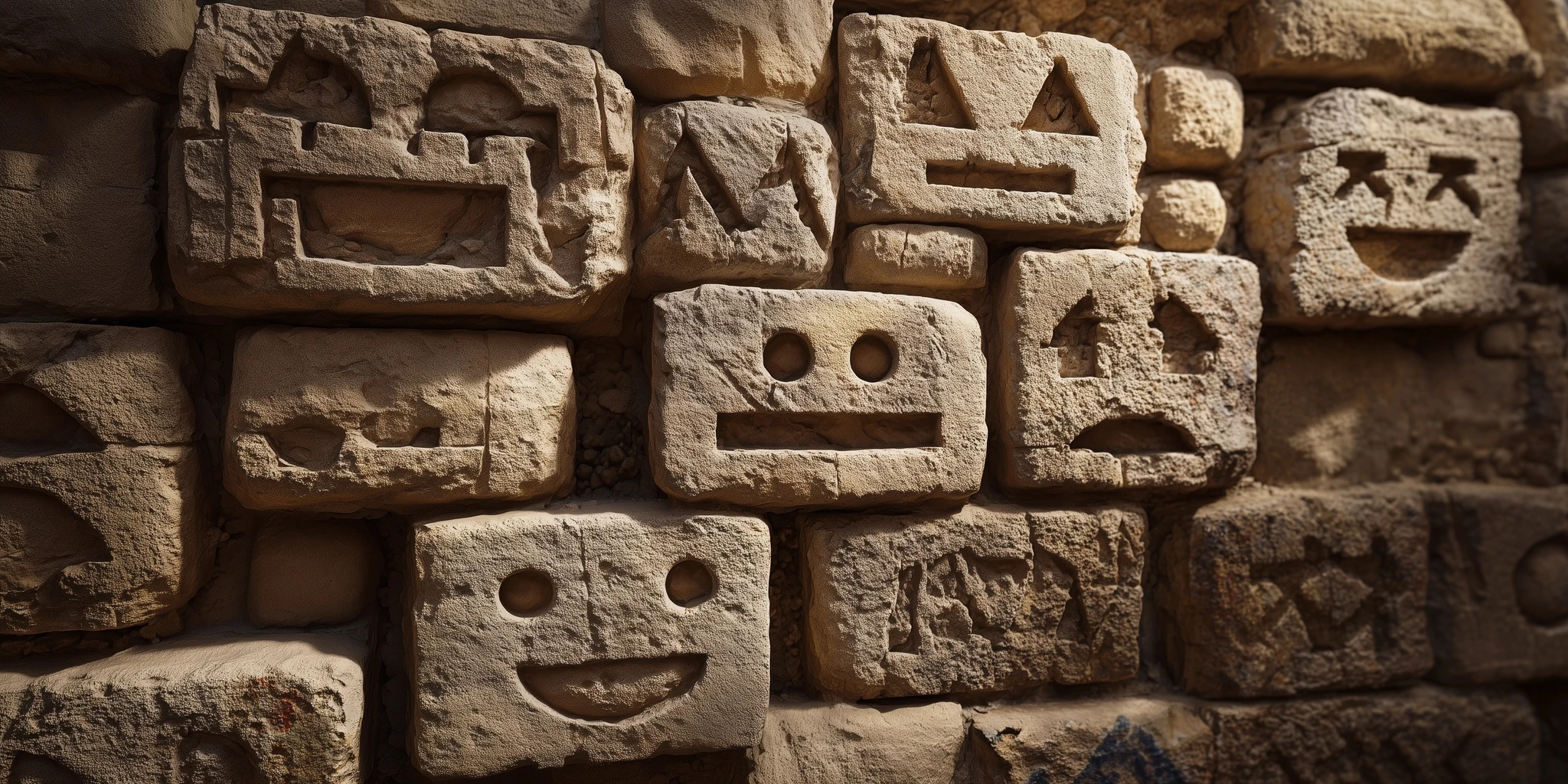
It’s 1000 B.C.E., and you’re an artist newly arrived in a great ancient empire—perhaps Egypt, China, or the Indus Valley. Your mission? To create a powerful new symbol that represents an idea your society values deeply.
You’re ready to start—but first, you need to understand the world around you. What matters to this civilization? How will people interpret your art? To find out, you’ll dive into the real symbols and icons left behind by ancient artists.
Why are cats so prominent in Egyptian tombs?
Why did a Chinese emperor commission thousands of life-sized soldiers to be buried with him?
In this class, you’ll explore the beliefs, events, and cultures of ancient societies through the lens of symbolism. Along the way, you’ll develop your research skills, sharpen your writing, and unleash your creative vision as you design your own meaningful icon.
STEM
Galactic Eco Engineers
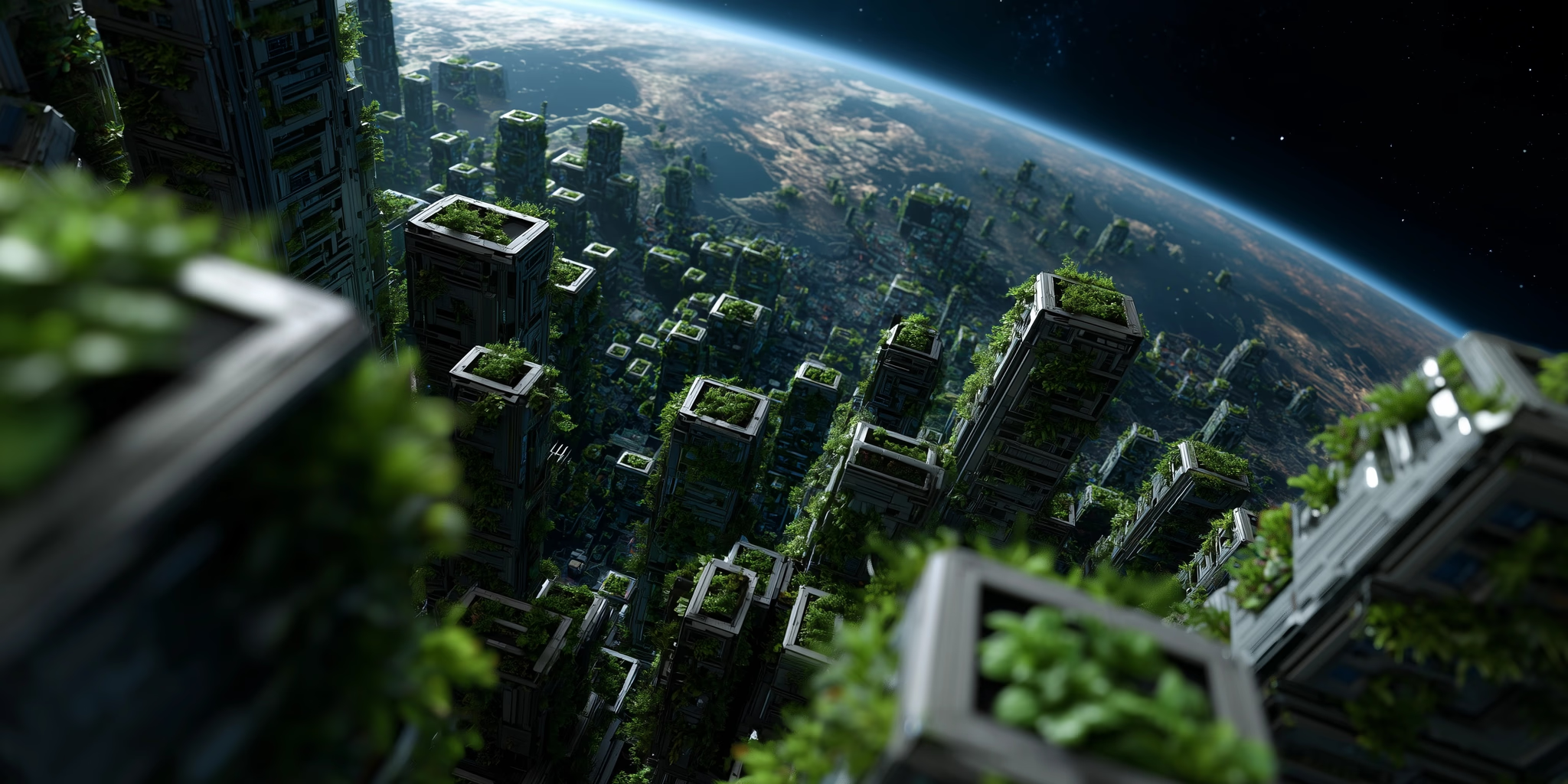
Get ready to design a home that balances sustainability with the bold challenges of the final frontier. First, you’ll explore what it takes to create an eco-friendly home right here on Earth—then, you’ll take your design to the stars, adapting it for life on a new planet.
What materials and systems would you need to survive on Mars, the Moon, or a distant exoplanet? How would you modify your home to handle extreme temperatures, limited resources, or low gravity?
In this course, you’ll apply earth science, environmental science, and math to design sustainable homes and communities. You’ll explore farming technologies like hydroponics, tackle real-world engineering problems, and think like a space architect.
From Earth’s ecosystems to the far reaches of space, discover how science, innovation, and creativity shape the way we live—now and in the future.

PETspedition
The Great PETSpedition is a life science expedition that uses pets as an entry point to explore biology, behavior, and human-animal relationships. Students investigate body systems, domestication, artificial selection, and animal intuition while developing skills in project management, scientific inquiry, and communication.
The expedition is designed to be hands-on, curiosity-driven, and flexible, with final projects ranging from veterinary case studies to pet care guides and ethical shelter designs. It’s a playful yet rigorous approach to life science that meets students where they’re at—through the animals they know and love.
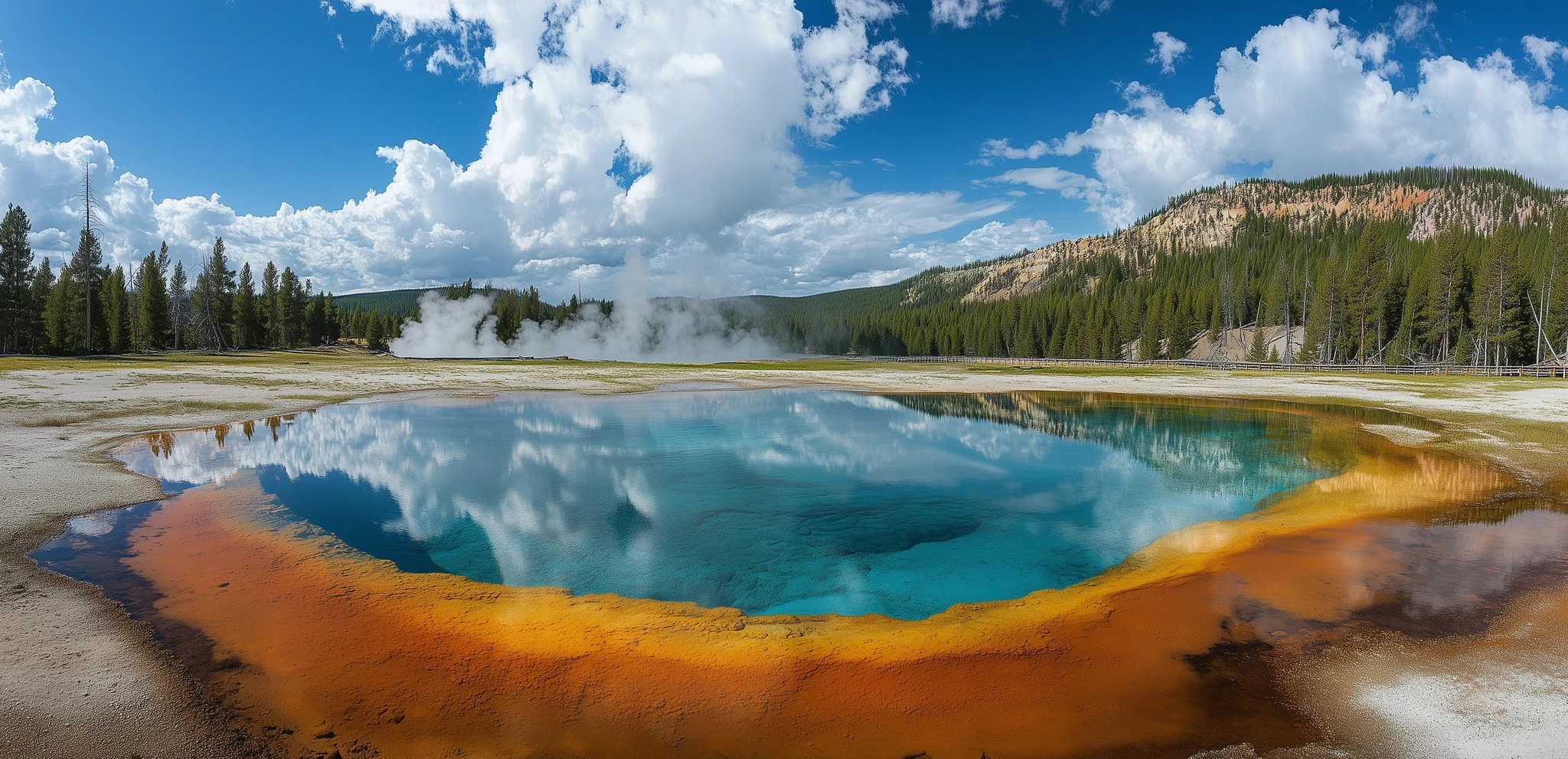
Yellowstone
Yellowstone and other ecosystems have a delicate balance... but can an apex predator change the entire dynamic?
This expedition explores the historic reintroduction of gray wolves to Yellowstone National Park in the mid-1990s and the profound impact it had on the park’s ecosystem, local communities, and national environmental policy.
Students will examine the ecological concept of a trophic cascade—the ripple effect predators have throughout an ecosystem—and how predator-prey dynamics influence populations of elk, beavers, and even plant life.
This expedition offers a comprehensive look at one of the world’s most renowned wildlife conservation efforts, highlighting both its ecological significance and the real-world challenges it continues to face.
Rube it Ralph
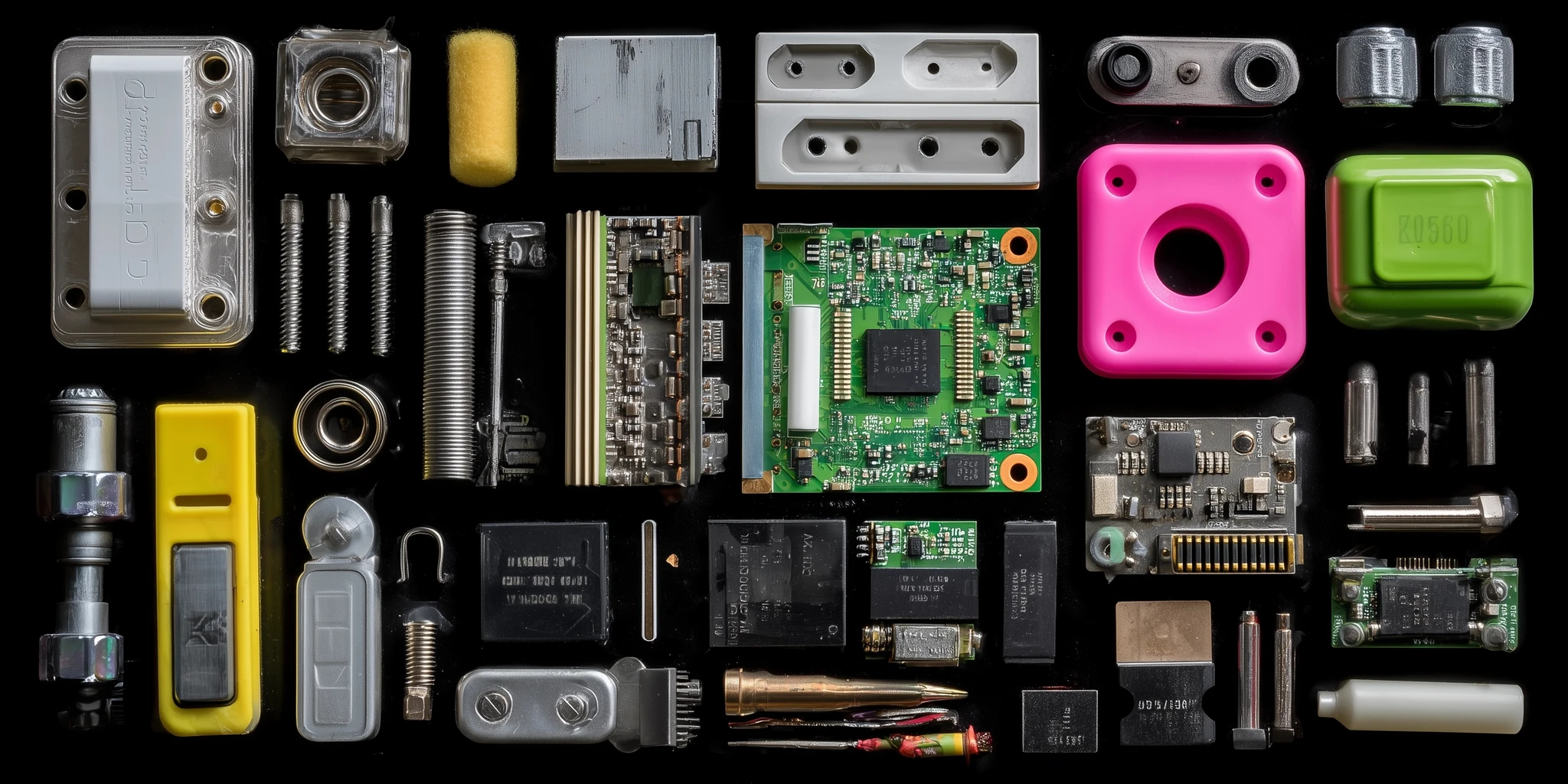
Explore the core concepts of engineering by dissecting everyday devices to discover how they work—from simple machines to circuits and electrical components. Through hands-on teardowns, you’ll gain insight into the inner workings of common technologies.
The course culminates in a final project where you’ll apply your knowledge to design and build your own Rube Goldberg machine, integrating both mechanical and electrical elements to showcase your creativity, engineering skills, and problem-solving abilities.

Let's go to Space Camp!
Over 12 weeks, they’ll explore the laws of physics and space science to understand how objects move through space, how astronauts live and work on the International Space Station, and how engineers design the technology that gets us there. Students will take part in astronaut training simulations, design challenges, and interactive exhibits that bring space science and engineering to life.
With a mix of hands-on experiments, collaborative problem-solving, and design thinking, students will tackle real-world challenges that astronauts face. This expedition culminates in a final project where students pitch their own space-ready invention, product, or experiment—designed to survive the extremes of space.
Math

Bringing Ideas to Life
In this cycle, you’ll take on real-world roles like club treasurer, event planner, and cookbook creator. You’ll use math to manage budgets, plan exciting trips, and perfect recipes. Discover how math helps you make smart decisions and turn your ideas into reality!
As a club treasurer, you’ll manage a budget for a school club—deciding how to allocate funds for supplies, events, and activities—while applying math skills to make cost-effective choices. Next, plan the Ultimate School Tour by designing a trip itinerary for a meet-up in your area, using math to organize transportation, meals, activities, and timelines.
Finally, contribute to a Community Cookbook by using a family recipe or creating your own. You’ll apply math to calculate ingredient costs, convert measurements from fractions to decimals, and scale recipes to different serving sizes.

Mission Possible
Ready to turn your dreams into reality? In this expedition, you’ll choose a personal goal that excites you—whether it’s reading more books, mastering an instrument, saving money for something special, or building your fitness routine.
As you track your progress, you’ll use math to uncover patterns, crunch numbers, and see how small changes can lead to big results. From calculating totals and averages to comparing progress with benchmarks and projecting your success, you’ll become a pro at using decimals, fractions, ratios, and percentages to plan and achieve.
By the end, you’ll not only reach your goal but also have a personalized roadmap showing how math helped you get there. It’s time to take charge of your goals and see how math can power your progress!
The Campus of Tomorrow
What if you could design the perfect home for The Classical Academies?
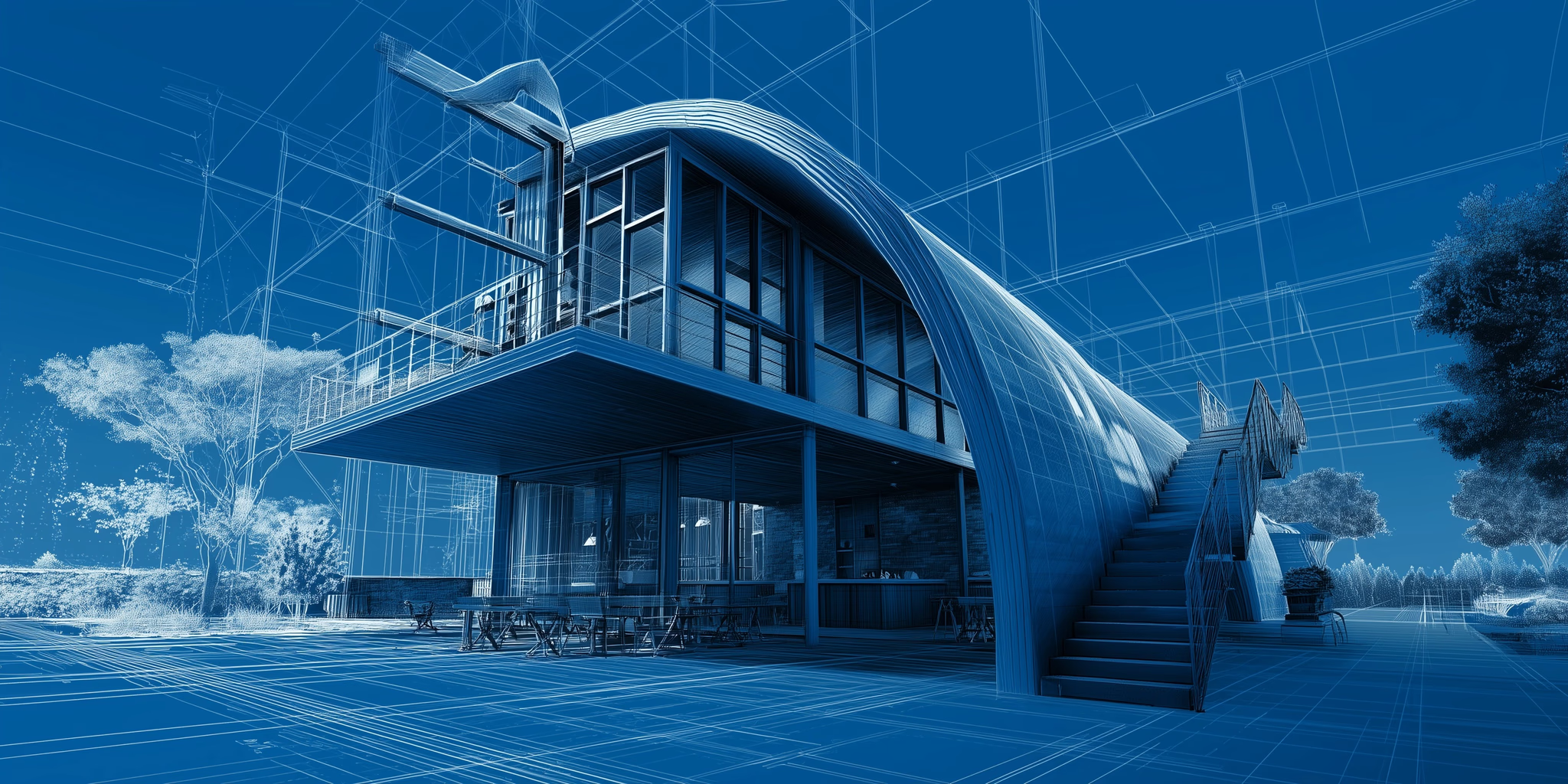
Create a virtual campus where every space fuels creativity and connection. From classrooms to chill zones, use math to bring your vision to life and redefine what a school can be!
In this project, you’ll design the ultimate virtual campus for The Classical Academies—a space that reflects our innovative spirit and inspires creativity. This is your chance to reimagine the perfect online learning hub.
Start by planning a budget, using math to make thoughtful decisions about tools, resources, and designs. Then, map out your virtual campus by designing spaces like classrooms, collaborative lounges, and creative studios using geometric shapes, angles, and coordinates. Finally, apply your math skills to calculate areas, volumes, and surface areas—ensuring every part of your campus is functional, efficient, and engaging.
By the end, you’ll present your vision for the future of The Classical Academies—a math-powered masterpiece that brings our community together in a virtual world like no other!